
Northwestern Supplemental Essays Rubric
Show interdisciplinary fit by naming two real Northwestern nodes that actually intersect in your work. Pair that path with a contribution you can make on campus, not a buzzword about being interdisciplinary.
- Dimensions7
- Score Range0–5
- Word Count200 - 400
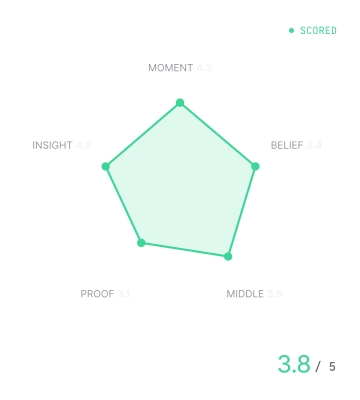
Would your draft pass this rubric?
Check what's true of your current draft. Be honest, the reviewer will be.
- I can point to one specific occasion where it started, not a season, year, or era
- My draft names a belief or behavior I held before, and what replaced it
- There are visible attempts or setbacks between the event and the lesson
- My new understanding is specific enough to quote, it couldn't close someone else's essay
- At least one concrete action after the growth period proves it stuck
Signal building. Over halfway — the missing dimensions are the ones readers weigh hardest.
Get the real scoreWhat Reviewers Look For:
Northwestern Supplemental Essays
Precision of School and Program Fit Within Northwestern's Structure
Evaluates whether the applicant names a specific school (Weinberg, McCormick, Medill, Bienen, SoC, SESP) and articulates why that unit's curriculum, culture, or pedagogy matches their intellectual direction. Strong responses treat the school as a meaningful choice, not a prestige container.
Authentic Interdisciplinary Reasoning Across Two Named Northwestern Nodes
Assesses whether the applicant identifies two specific, named Northwestern resources (programs, labs, centers, faculty clusters, or course sequences) and explains how their work genuinely sits at the intersection. Strong responses show the intersection is load-bearing, not decorative.
Specificity and Credibility of Named Campus Opportunities
Judges whether the applicant cites real, verifiable Northwestern opportunities (research centers, student organizations, quarter-system courses, faculty labs, or publications) by name and explains why each is relevant to their path. Vague gestures toward 'research opportunities' or 'clubs' receive no credit.
Concrete and Actionable Contribution to the Northwestern Community
Evaluates whether the applicant articulates a contribution they are positioned to make, grounded in skills, projects, or perspectives they already hold. Strong responses describe what the applicant will bring, not what they hope to absorb.
Quality and Relevance of Evidence Grounding the Narrative
Assesses whether claims about interest, preparation, and fit are supported by specific experiences, projects, coursework, or moments rather than assertion alone. Strong responses use evidence that is particular enough to be falsifiable.
Direct and Complete Engagement With the Prompt's Actual Question
Judges whether the applicant answers what was asked without substituting a preferred topic or writing a general personal statement. Strong responses stay on task and use every sentence to advance the prompt's specific inquiry.
Coherence of the Two Named Northwestern Nodes as a Genuine Intersection
Evaluates whether the two Northwestern resources or programs the applicant names actually connect in a way that is intellectually coherent and specific to their work, rather than being two unrelated name-drops. Strong responses show that removing either node would break the argument.
Stanford Supplemental Essays
Reveal intellectual vitality and character that the Common App essay cannot carry on its own. Anchor your short answers in a named idea, person, or problem you obsess over, and let who you are emerge from specific behavior rather than claimed values.
5 DIMENSIONS150-650 WORDSOpen rubricHarvard Supplemental Essays
Show how you think with evidence from real work, not a summary of accomplishments already listed elsewhere. Portray the residential community you would join through contribution you have already practiced, not through performative humility or name worship.
7 DIMENSIONS100-450 WORDSOpen rubricYale Supplemental Essays
Answer Yale's short prompts directly: what you are curious about, how you live with others, and what you notice about yourself. Prefer concrete habits of learning and community over recycled Common App material or brochure paraphrases.
6 DIMENSIONS200-650 WORDSOpen rubricPrinceton Supplemental Essays
Evidence service, lived experience, and intellectual engagement with a named community, a real constraint, and your actual role. Avoid savior narratives and unearned claims about changing the world; particularity beats aspiration.
8 DIMENSIONS200-650 WORDSOpen rubricColumbia Supplemental Essays
Show why the Core and New York are load-bearing for an intellectual question you are already pursuing. Lists and short answers should expose taste and a mind at work, not branding or tourism language.
5 DIMENSIONS150-500 WORDSOpen rubricBrown Supplemental Essays
Explain why the Open Curriculum is necessary for how you already learn, not merely attractive as a slogan. Show curricular self-direction you have already practiced, and what you would do with freedom rather than only enjoy it.
7 DIMENSIONS200-600 WORDSOpen rubricDartmouth Supplemental Essays
Show who you are in community through memorable, particular details about how you live with others. Make Dartmouth's place, people, and undergraduate life load-bearing so the fit could not be swapped for another small college.
6 DIMENSIONS150-550 WORDSOpen rubricCornell College-Specific Supplements
Write to the undergraduate college you are applying to, not to Cornell as a brand. Connect your preparation to a curriculum, research setting, or professional path that only that college makes executable.
8 DIMENSIONS250-650 WORDSOpen rubricDuke Supplemental Essays
Show the community you would join and the intellectual energy you would bring, tied to named campus opportunities. Avoid athletics-as-fit, weather clichés, and essays that merely restate the Common App.
5 DIMENSIONS150-500 WORDSOpen rubricUChicago Extended Essay
Take one uncommon idea and develop it all the way through with originality, rigor, and control of the conceit. Prefer a fully argued intellectual play over a disguised Why UChicago statement that turns conventional after the hook.
8 DIMENSIONS500-1000 WORDSOpen rubricPenn Supplemental Essays
Name the undergraduate school you are applying to and show how its curriculum enables a specific trajectory. Ground campus and civic claims in named houses, centers, or contexts rather than Penn's reputation alone.
7 DIMENSIONS250-650 WORDSOpen rubricVanderbilt Supplemental Essays
Connect a community you already belong to with a contribution you would make on a residential campus. Identity should move beyond a label, and the link from past experience to future contribution should be causal, not merely thematic.
5 DIMENSIONS200-400 WORDSOpen rubricRice Supplemental Essays
Show what you want to study and how you would live inside a residential college as a real community, not a housing bullet. Use reasons and resources a peer school would not share, and let academic interest leave the major name behind.
6 DIMENSIONS150-400 WORDSOpen rubricJohns Hopkins Supplemental Essays
Show intellectual initiative and collaboration through a named project and your actual role. Build an evidence trail from action to claim, and let future direction follow from past initiative rather than hospital or ranking name-drops.
8 DIMENSIONS200-400 WORDSOpen rubric
Frequently asked questions
Quick answers about using the Northwestern Supplemental Essays rubric.

Give the draft one more informed pass
Review the draft against its prompt, surface weak spots, and decide what to revise before submission.
Review your first draft