
Brown Supplemental Essays Rubric
Explain why the Open Curriculum is necessary for how you already learn, not merely attractive as a slogan. Show curricular self-direction you have already practiced, and what you would do with freedom rather than only enjoy it.
- Dimensions7
- Score Range0–5
- Word Count200 - 600
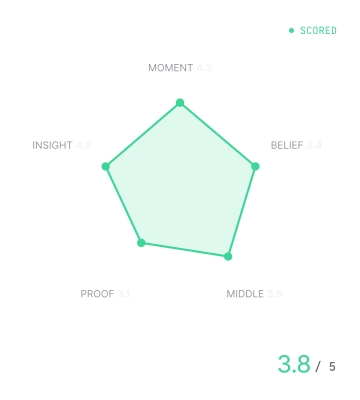
Would your draft pass this rubric?
Check what's true of your current draft. Be honest, the reviewer will be.
- I can point to one specific occasion where it started, not a season, year, or era
- My draft names a belief or behavior I held before, and what replaced it
- There are visible attempts or setbacks between the event and the lesson
- My new understanding is specific enough to quote, it couldn't close someone else's essay
- At least one concrete action after the growth period proves it stuck
Signal building. Over halfway — the missing dimensions are the ones readers weigh hardest.
Get the real scoreWhat Reviewers Look For:
Brown Supplemental Essays
Evidence of Self-Directed Learning Already in Practice Before Brown
Evaluates whether the applicant has already pursued learning outside prescribed tracks, not merely expressed a desire to do so. Strong responses show a concrete record of self-initiated inquiry, independent study, or curricular detours the applicant chose without institutional prompting.
Coherent Rationale for Why the Open Curriculum Is Necessary, Not Just Appealing
Assesses whether the applicant explains a genuine structural need for curricular freedom, grounded in how they actually learn. Strong responses identify a specific tension between how the applicant thinks and what a fixed distribution system would constrain.
Specificity of Intellectual Interests and Named Areas of Inquiry
Evaluates how precisely the applicant names the ideas, fields, or questions that drive them, rather than describing broad subject enthusiasm. Strong responses name particular concepts, thinkers, methods, or problems the applicant has already engaged.
Depth and Honesty of Personal Motivation for Choosing This Path
Assesses whether the applicant's stated motivation is grounded in lived experience and genuine intellectual history, or assembled from admissions-facing language. Strong responses trace motivation to a specific moment, encounter, or sustained problem rather than a general disposition.
Clarity of What the Applicant Would Actually Do With Curricular Freedom
Judges whether the applicant articulates a concrete plan or direction for using the Open Curriculum, not just an appreciation of its existence. Strong responses describe a specific intellectual project, combination of fields, or mode of inquiry the applicant intends to pursue.
Quality and Credibility of Contribution to the Brown Community
Evaluates whether the applicant's contribution claims are grounded in specific capacities, perspectives, or practices they would bring, rather than generic statements of enthusiasm or identity. Strong responses name what the applicant would add to intellectual and community life based on what they have already done.
Maturity of Reflection on Learning, Failure, or Intellectual Revision
Assesses whether the applicant demonstrates genuine self-awareness about how they learn, including moments when their thinking changed, broke down, or required revision. Strong responses show an applicant who has interrogated their own assumptions, not merely reported their achievements.
Stanford Supplemental Essays
Reveal intellectual vitality and character that the Common App essay cannot carry on its own. Anchor your short answers in a named idea, person, or problem you obsess over, and let who you are emerge from specific behavior rather than claimed values.
5 DIMENSIONS150-650 WORDSOpen rubricHarvard Supplemental Essays
Show how you think with evidence from real work, not a summary of accomplishments already listed elsewhere. Portray the residential community you would join through contribution you have already practiced, not through performative humility or name worship.
7 DIMENSIONS100-450 WORDSOpen rubricYale Supplemental Essays
Answer Yale's short prompts directly: what you are curious about, how you live with others, and what you notice about yourself. Prefer concrete habits of learning and community over recycled Common App material or brochure paraphrases.
6 DIMENSIONS200-650 WORDSOpen rubricPrinceton Supplemental Essays
Evidence service, lived experience, and intellectual engagement with a named community, a real constraint, and your actual role. Avoid savior narratives and unearned claims about changing the world; particularity beats aspiration.
8 DIMENSIONS200-650 WORDSOpen rubricColumbia Supplemental Essays
Show why the Core and New York are load-bearing for an intellectual question you are already pursuing. Lists and short answers should expose taste and a mind at work, not branding or tourism language.
5 DIMENSIONS150-500 WORDSOpen rubricDartmouth Supplemental Essays
Show who you are in community through memorable, particular details about how you live with others. Make Dartmouth's place, people, and undergraduate life load-bearing so the fit could not be swapped for another small college.
6 DIMENSIONS150-550 WORDSOpen rubricCornell College-Specific Supplements
Write to the undergraduate college you are applying to, not to Cornell as a brand. Connect your preparation to a curriculum, research setting, or professional path that only that college makes executable.
8 DIMENSIONS250-650 WORDSOpen rubricDuke Supplemental Essays
Show the community you would join and the intellectual energy you would bring, tied to named campus opportunities. Avoid athletics-as-fit, weather clichés, and essays that merely restate the Common App.
5 DIMENSIONS150-500 WORDSOpen rubricNorthwestern Supplemental Essays
Show interdisciplinary fit by naming two real Northwestern nodes that actually intersect in your work. Pair that path with a contribution you can make on campus, not a buzzword about being interdisciplinary.
7 DIMENSIONS200-400 WORDSOpen rubricUChicago Extended Essay
Take one uncommon idea and develop it all the way through with originality, rigor, and control of the conceit. Prefer a fully argued intellectual play over a disguised Why UChicago statement that turns conventional after the hook.
8 DIMENSIONS500-1000 WORDSOpen rubricPenn Supplemental Essays
Name the undergraduate school you are applying to and show how its curriculum enables a specific trajectory. Ground campus and civic claims in named houses, centers, or contexts rather than Penn's reputation alone.
7 DIMENSIONS250-650 WORDSOpen rubricVanderbilt Supplemental Essays
Connect a community you already belong to with a contribution you would make on a residential campus. Identity should move beyond a label, and the link from past experience to future contribution should be causal, not merely thematic.
5 DIMENSIONS200-400 WORDSOpen rubricRice Supplemental Essays
Show what you want to study and how you would live inside a residential college as a real community, not a housing bullet. Use reasons and resources a peer school would not share, and let academic interest leave the major name behind.
6 DIMENSIONS150-400 WORDSOpen rubricJohns Hopkins Supplemental Essays
Show intellectual initiative and collaboration through a named project and your actual role. Build an evidence trail from action to claim, and let future direction follow from past initiative rather than hospital or ranking name-drops.
8 DIMENSIONS200-400 WORDSOpen rubric
Frequently asked questions
Quick answers about using the Brown Supplemental Essays rubric.

Give the draft one more informed pass
Review the draft against its prompt, surface weak spots, and decide what to revise before submission.
Review your first draft