
Statement of Purpose for MFA and Creative Programs Rubric
Designed for candidates pursuing MFA and creative master's programs, this rubric evaluates the full arc of the artistic statement: the clarity and conviction of creative intent, the depth and distinctiveness of one's practice, the context and evolution reflected in the portfolio, alignment with the program's creative community, the authenticity of artistic voice, and the coherence of a forward-looking creative vision.
- Dimensions7
- Score Range0–5
- Word Count1000 - 1200
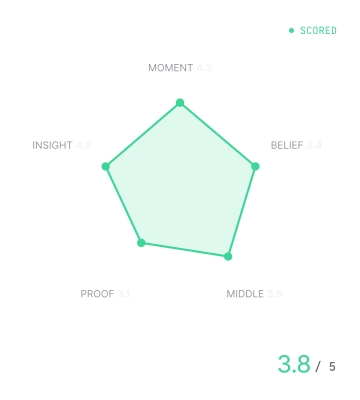
Would your draft pass this rubric?
Check what's true of your current draft. Be honest, the reviewer will be.
- I can point to one specific occasion where it started, not a season, year, or era
- My draft names a belief or behavior I held before, and what replaced it
- There are visible attempts or setbacks between the event and the lesson
- My new understanding is specific enough to quote, it couldn't close someone else's essay
- At least one concrete action after the growth period proves it stuck
Signal building. Over halfway — the missing dimensions are the ones readers weigh hardest.
Get the real scoreWhat Reviewers Look For:
Statement of Purpose for MFA and Creative Programs
Opening and Artistic Intent
Evaluates whether the applicant establishes a clear, specific artistic motivation and compelling entry point that frames their creative identity. Strong responses open with a concrete artistic problem, obsession, or question rather than biography or generality.
Creative Practice and Aesthetic Approach
Evaluates the applicant's ability to articulate their working methods, materials, influences, and the aesthetic logic that governs their creative decisions. Strong responses demonstrate self-awareness about how and why they make work, not just what they make.
Portfolio Context and Craft Growth
Evaluates whether the applicant contextualizes their existing body of work and demonstrates measurable growth in craft over time. Strong responses situate portfolio pieces within an evolving inquiry and name specific technical or conceptual challenges they have worked through.
Program Fit and Creative Community Alignment
Evaluates whether the applicant identifies specific program elements — faculty, studios, pedagogy, peer culture — that align with their creative needs at this stage of development. Strong responses show research-backed reasoning for why this program and not a generic MFA.
Personalization and Artistic Specificity
Evaluates the degree to which the essay is written for this program specifically, with details that could not be transplanted to a generic application. Strong responses weave program-specific references into the narrative of artistic need rather than appending them as a separate paragraph.
Artistic Voice and Authenticity
Evaluates whether the prose style of the statement itself reflects the applicant's creative sensibility and feels authored rather than assembled from admissions templates. Strong responses have a distinctive cadence, point of view, or structural choice that is consistent with the work they describe making.
Future Creative Direction and Community Contribution
Evaluates whether the applicant articulates a credible post-program direction and demonstrates awareness of the larger artistic or intellectual communities their work engages. Strong responses name specific conversations, traditions, or communities the applicant intends to enter, challenge, or sustain.
Concise German Motivation Statement — LMU, KIT & Comparable Portals
Tailored for German master's application portals such as LMU, KIT, and equivalent platforms: a focused, evidence-grounded motivation statement that adheres to strict character constraints (2,000–3,000 characters) and is composed entirely in plain text.
6 DIMENSIONS300-500 WORDSOpen rubricMaster's Motivation Letter — Netherlands (Standard)
Crafted for master's applications at Dutch universities: a lucid, evidence-grounded motivation letter that articulates a compelling alignment with the chosen programme, well-defined professional aspirations, and the direct, substantive communication style that Netherlands admissions committees value.
6 DIMENSIONS500-1000 WORDSOpen rubricAcademic Statement of Purpose — LSE
For LSE and comparable UK programmes requiring a minimum of 80% academic content: demonstrate intellectual depth, rigorous critical engagement with your discipline, and a compelling alignment with the specific programme, within 1,000–1,500 words.
7 DIMENSIONS1000-1500 WORDSOpen rubricTU Delft Research Master's Motivation Letter
Tailored for TU Delft master's programmes: a carefully structured motivation letter that articulates proposed thesis projects, distils the applicant's BSc thesis with precision, and presents a compelling rationale for their chosen specialisation — demonstrating genuine readiness for rigorous research and a well-grounded sense of intellectual self-assurance.
7 DIMENSIONS1000-1500 WORDSOpen rubricNL Scholarship Personal Motivation Letter
For the NL Scholarship (formerly the Holland Scholarship): craft a persuasive and well-considered case for your distinction as a student by illuminating your academic achievements and the meaningful impact of your extracurricular pursuits, within 500 words.
6 DIMENSIONS300-500 WORDSOpen rubricMaster's Motivation Letter — Dutch Concise Edition
A rigorously distilled motivation letter crafted for Dutch universities that impose strict word limits: each word must justify its presence, the argument must remain sharply focused and free of superfluous content, and the letter must fall precisely within a 300–500 word count.
6 DIMENSIONS300-500 WORDSOpen rubricMaster's Motivation Letter for German Applications (Motivationsschreiben)
Tailored for candidates pursuing master's programs at German institutions: a clear, evidence-grounded motivation letter that articulates program fit, academic preparedness, professional aspirations, and a considered rationale for choosing Germany.
7 DIMENSIONS300-1000 WORDSOpen rubricMaster's Statement of Purpose for Professional Programs
Crafted for candidates pursuing career-focused master's programs, this rubric evaluates the clarity of professional objectives, the applicant's self-aware identification of skill gaps, the coherence of their alignment with the program, their demonstrated readiness to thrive, and the distinctive value they bring to the cohort.
7 DIMENSIONS1000-1200 WORDSOpen rubricUK/EU Master's Personal Statement & Motivation Letter
Tailored for taught master's applicants in the UK and EU, this rubric assesses the coherence and conviction of the applicant's motivation, the depth of their academic preparation, the alignment between their profile and the chosen programme, the strength and specificity of supporting evidence, and the clarity of their forward-looking vision (600–900 words).
6 DIMENSIONS600-900 WORDSOpen rubricMaster's Statement of Purpose
A Statement of Purpose is a defining document required by most Master's programs, through which you articulate your scholarly motivations, intellectual trajectory, and the aspirations that compel you toward graduate study.
8 DIMENSIONS1000-1200 WORDSOpen rubric
Frequently asked questions
Quick answers about using the Statement of Purpose for MFA and Creative Programs rubric.

Give the draft one more informed pass
Review the draft against its prompt, surface weak spots, and decide what to revise before submission.
Review your first draft